Archive for the ‘Senior Health’ Category
Would seniors in Oak Park rather do sit-ups or dance?
 May 4th, 2010 |
  Author:
  “There are short-cuts to happiness, and dancing is one of them.” ~Vicki Baum.
Ms. Baum is right. Dancing also can be a short-cut to health – both physically and mentally. According to Brain Fitness For Seniors.com, dancing is a boon to health because it stimulates different areas of the brain. How? Well, it often requires learning new steps, and it keeps seniors connected to others. It involves balance, coordination, listening, rhythm, motion, emotions, and physical touch.
Present day seniors grew up dancing. There were grand, lavish ballrooms, and people in cities took the streetcars to dance the night away. Ballroom dancing was a popular choice for a date. Big Band orchestras under the batons of Tommy Dorsey or Harry James toured the country playing in these wonderful ballrooms.
Today’s seniors are still dancing. Seniors’ dances are everywhere, and there are even exercise classes of “seated” dancing. If an entertainer performs the “old favorites” at a senior center or assisted living community, the audience instantly responds with toe-tapping and probably a rush of memories.
Health-wise, a dance routine for older adults can improve fitness in a low-impact way. More specifically, the physical benefits of dance from Ehow.com include:
- Improves cardiovascular fitness – Even light dancing will increase the heart rate and give the heart a good workout.
- Builds muscles – Through dance, seniors work their muscles and help to combat the effects of age.
- Improves social outlook – By joining a dance class—no matter what type of dance—they can enjoy the company of being with other dancers.
- Increases balance and control – The improved balance that comes from dancing helps prevent slips and falls.
- Increases bone mass – Both men and women begin to lose bone mass as they age, leading to more broken bones when they fall.
- Improves flexibility – A good dance workout will include stretching time which can help senior citizens increase flexibility and reduce muscle aches.
Again, from Brain Fitness For Seniors.com, by improving the social interactivity of seniors, dancing increases social harmony, understanding and tolerance in the community which is important because aging requires people of sometimes diverse backgrounds to live closer together in retirement homes and communities.
Music and rhythm have measurable effects on the brain and are the subject of multiple studies of brain-fitness benefits in both the young and old. Listening to music itself can have clear effects on the brain, stimulating different areas, changing brainwave patterns, and relieving stress.
Some believe that just watching dance stimulates the brain – mental stimulation that may be almost as powerful as performing the activity first hand. Even seniors who are too physically restricted to move freely can still participate and gain brain fitness benefits from social dance groups.
In summary, the lyrics of country music star Lee Ann Womack’s signature song say it all:
“I hope you still feel small when you stand behind the ocean.
I hope whenever one door closes, another opens.
Promise me that you’ll give faith a fighting chance,
and when you get the choice to sit it out or dance…
I Hope You Dance.”

Seniors in Oak Park recognize the top 10 health care mistakes
Health care can be a maze of doctor’s appointments, prescriptions, tests, safety measures, etc. As seniors age, the maze becomes even more complicated. What the doctor said is unclear, driving becomes a challenge, and a myriad of additional issues add to the confusion.
Ten areas of concern are outlined below. Some of these concerns are moot when a move to an assisted living community occurs. In a community, systems exist to manage medications, safety measures have been carefully considered and built-in, more help is available, and many seniors give up the car when they move to a community.
According to the Institute for Healthcare Advancement it’s true that many seniors are living longer, but it’s also true that many could improve the way they deal with health problems. To help seniors stay healthier longer, the IHA has identified the 10 most common mistakes older adults make in caring for their health:
- Driving when it’s no longer safe
Seniors often associate mobility in a car with their independence, but knowing when it is time to stop driving is important for the safety of everyone on the road. - Fighting the aging process and its appearance
Refusing to wear a hearing aid, eyeglasses or dentures, and reluctance to ask for help or to use walking aids are all examples of this type of denial. - Reluctance to discuss intimate health problems with the doctor or health care provider
Older Americans may not want to bring up sexual or urinary difficulties. Sometimes problems that the individual thinks are trivial, such as stomach upsets, constipation, or jaw pain, may require further evaluation. - Not understanding what the doctor told them about their health problem or medical treatment plan
Not understanding the doctor or not remembering what he said are typical complaints. Reluctance to ask the doctor to repeat information or to admit that they do not understand what is being said can result in serious health consequences. - Disregarding the serious potential for a fall
To help guard against falling, seniors should remove scatter rugs from the home and have adequate lighting throughout. They should wear sturdy and well-fitting shoes, and watch for slopes and cracks in sidewalks. Participating in exercise programs to improve muscle tone and strength is also helpful. - Failure to have a system or a plan for managing medicines
By using daily schedules, pill box reminders or check-off records, seniors can avoid missing medication doses. - Not having a single primary care physician who looks at the overall medical plan of treatment
Health problems may be overlooked when a senior goes to several different doctors or treatment programs, and multiple treatment regimens may cause adverse responses. - Not seeking medical attention when early possible warning signs occur
Reasons for such inaction and denial may include lack of money or reduced self worth due to age. Of course, such treatment delays can result in a poorer prognosis. - Failure to participate in prevention programs
Flu and pneumonia shots, routine breast and prostate exams are examples of readily available preventive health measures that seniors should utilize. - Not asking loved ones for help
Many older Americans are reluctant to ask for help whether due to a need for independence or because of early signs of dementia. It’s important that elderly people alert family members or other loved ones to any signs of ill health or unusual feelings so that they can be assessed before the problem advances.
 Posted in Senior Aging Tips, Senior Health |
  Tags: assisted living Berwyn, assisted living Elmwood Park, assisted living Forest Park, assisted living Oak Park, assisted living River Forest, health care mistakes, Oak Park Arms, retirement community Berwyn, retirement community Elmwood Park, retirement community Forest Park, retirement community Oak Park, retirement community River Forest |
  No Comments »
Knee pain nothing to sneeze about for seniors in Oak Park
Oh my aching knees. According to senior-fitness.com, in a typical year more than 6 million seniors, age 62 and older, will visit a doctor because of knee pain.
A healthy knee easily can withstand loads equal to more than four times the body weight. Pretty amazing, don’t you agree?
A knee is a joint, and a joint occurs wherever two bones come together. But that definition doesn’t begin to convey the intricacy of joints which provide the body with flexibility, support and a wide range of motion.
The body has four types of joints: fixed, pivot, ball-and-socket, and hinge. Knees are hinge joints which work much like the hinge of a door, allowing the joint to move backward and forward. Knees are the largest and heaviest hinge joints in the body. They’re also the most complex. In addition to bending and straightening, they twist and rotate like a gyroscope. This makes knees especially susceptible to damage which is why they sustain more injuries on average than do other joints.
The knee joint is four bones held together by ligaments. The thighbone (femur) makes up the top part of the joint, and two lower leg bones, the tibia and the fibula, are the lower part. The fourth bone, the patella, slides in a groove on the end of the femur. Ligaments are large bands of tissue that connect bones to one another. In the knee joint, four main ligaments link the femur to the tibia and help stabilize the knee as it moves through its arc of motion.
Over the course of a lifetime, natural lubricants dry-up, and the cartilage wears away. This can lead to arthritis. Then is knee pain inevitable? Many experts think that the human knee can last a long lifetime, provided it’s not abused and receives some basic preventive maintenance. The right lifestyle and activity choices can help make knees stronger, healthier, and more pliant. Most important is to keep moving.
Tips & Warnings from ehow.com:
- First and foremost, ask your doctor whether knee exercises are safe for you.
- Walk around for a few minutes before doing knee exercises to give muscles a chance to warm and stretch.
- Repeat any knee exercise only two or three times in the beginning.
- Wear comfortable, sturdy shoes to enhance balance and avoid jerky movements when doing knee exercises.
- Do not hold your breath when doing muscle-tightening exercises.
- Do not kneel directly on your knees when gardening or doing chores around the house. Seniors should use a low stool or padded kneepads.
- Do not exercise to the point that you start to feel pain
- Knee exercises must be done very slowly and gradually increased to avoid putting too much stress on muscles, tendons and ligaments.
The following exercises are recommended for seniors by ehow.com:
To strengthen the quadriceps (front of the thigh):
- Sit in a chair with your back straight and the balls of your feet touching the floor. If your entire foot lies flat on the floor, sit on some cushions to lift yourself up so only the balls of your feet touch the floor. Your hands can be either resting on your thighs or holding the chair.
- Bring your right leg in front of you and lift it very slowly until your knee is straight without feeling painful.
- Point your toes back towards your head while in this position and hold for 3 seconds.
- Lower your leg back slowly to the starting position, resting the balls of your feet on the floor.
- Repeat the entire exercise with your left leg. You can repeat this exercise 5 to 10 times if comfortable.
To strengthen the hamstrings (back of the thigh):
- Sit up straight in a chair with arms that will not move as you do this exercise. Prop the chair against a wall if that will keep it stable. Place legs at a 45-degree angle with heels resting on the floor.
- Dig your heels into the floor as you hold onto the arms of the chair. Hold that position for 5 seconds. You will feel your hamstring muscles tighten as you do this.
- Relax for 10 seconds and then repeat 5 to 10 times.
Posted in Senior Health |
Tags: assisted living Berwyn, assisted living Elmwood Park, assisted living Forest Park, assisted living Oak Park, assisted living River Forest, knee pain, Oak Park Arms, retirement community Berwyn, retirement community Elmwood Park, retirement community Forest Park, retirement community Oak Park, retirement community River Forest |
No Comments »
Healthy smiles for seniors in Oak Park
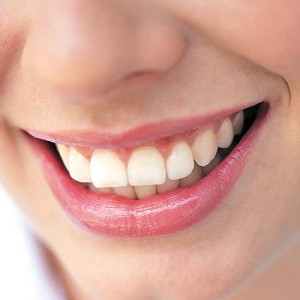 It’s an old stereotype – You will lose all your teeth as you age, and all seniors have dentures. Not so! Teeth are never too old to be repaired or replaced, and dentures aren’t the only game in town. Dental implants are a new option that many older adults are choosing.
But let’s not talk about repairing or replacing. Let’s talk about keeping the mouth healthy in the first place.
According to WebMD, daily brushing and flossing of natural teeth is essential to keeping them in good oral health.
It’s important for all individuals – regardless of age -to:
- Brush at least twice a day with a fluoride-containing toothpaste.
- Floss at least once a day.
- Visit the dentist on a regular schedule for cleaning and an oral exam.
The Mayo Clinic says the state of oral health can offer lots of clues about a person’s overall health.
The mouth is normally teeming with bacteria. Brushing and flossing can keep these bacteria under control. Saliva also is a key defense against bacteria and viruses, because it contains enzymes that destroy bacteria in different ways.
But harmful bacteria can sometimes grow out of control and lead to periodontitis, a serious gum infection. This disease is caused by bacteria in dental plaque, which if not removed through daily tooth brushing and flossing, results in red or swollen gums that bleed easily. And, if plaque remains on teeth too long, a hard deposit called tarter or calculus forms. This deposit is removed by a dental hygienist or dentist when the teeth are professionally cleaned.
Left untreated, periodontal disease can destroy the gum tissues and bone around teeth, and eventually teeth can be lost. Periodontitis also may provide bacteria a port of entry into the bloodstream. Medications or treatments that reduce saliva flow or disrupt the normal balance of bacteria in the mouth also may lead to oral changes.
To summarize, oral health is connected to many other health conditions beyond the mouth. Sometimes the first sign of a disease shows up in the mouth. Simply said, oral health is important for overall health and vice versa.
Posted in Senior Health |
Tags: assisted living Berwyn, assisted living Elmwood Park, assisted living Forest Park, assisted living Oak Park, assisted living River Forest, Oak Park Arms, oral health, retirement community Berwyn, retirement community Elmwood Park, retirement community Forest Park, retirement community Oak Park, retirement community River Forest |
No Comments »


